
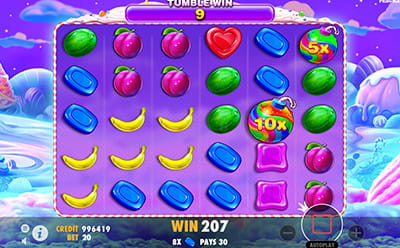
Game discovery is easier when you understand how a slot actually creates wins, rather than judging it only by its theme. The original Sweet Bonanza combines a 6×5 grid, pay-anywhere combinations and repeated tumbles, giving each spin a changing sequence of potential results. A sweet bonanza demo can help you learn the layout with virtual credits, but the most useful comparison comes from examining its symbols, bonus structure, volatility-related features and the specific version loaded by a casino.
Start with the way wins are formed
The slot uses a 6×5 grid containing 30 visible positions. It does not rely on traditional fixed paylines running across the reels. Instead, a win is created when at least eight matching paying symbols appear anywhere on the grid. This makes the game feel different from a classic three-reel or line-based slot because symbol location is less important than the total number appearing during a result.
Regular symbols include fruit such as bananas, grapes, watermelons, plums and apples, alongside higher-value candy symbols. Eight or nine matching symbols create the lowest qualifying combination, while 10 or 11, and then 12 or more, produce larger awards according to the paytable. Several different symbols can also win during the same result, with their awards combined before the next stage begins.

The central feature is the Tumble mechanic. After a winning combination is paid, those symbols disappear and the remaining symbols fall into the empty spaces. New symbols arrive from above, creating another chance for a combination on the same paid spin. Tumbling stops only when the new arrangement produces no further qualifying win, so one spin can contain several separate winning stages.
Compare the base game with its bonus round
The base game is relatively straightforward: select a stake, spin the grid and follow any winning combinations through their tumble sequence. Its main appeal comes from seeing whether one arrangement develops into another. This is a different experience from a slot where every spin ends after one fixed result, although a tumble does not guarantee that another win will appear.
The bonus round changes the presentation and the potential shape of a result. The pink-and-white lollipop serves as the Scatter symbol, and four or more Scatters trigger Free Spins. Four, five or six Scatters also provide a direct Scatter payout under the original rules. The feature normally begins with 10 spins, while three or more additional Scatters award five extra spins.
Multiplier bombs appear during Free Spins rather than ordinary play. Each bomb can carry a random value from 2x to 100x. Bombs remain visible until the current tumble sequence ends, after which their values are added together and applied to that sequence’s win. This means the feature is not simply a set of extra spins; it adds a second layer of evaluation to qualifying tumbles.
Check which version and settings you are viewing
Game discovery can become confusing because similarly named releases are not automatically the same title. The original slot should be distinguished from later products such as Sweet Bonanza 1000, Sweet Bonanza Super Scatter, Sweet Bonanza 2500, Sweet Bonanza Xmas and Sweet Bonanza POP. Their names may suggest a family resemblance, but their mechanics, symbols or feature rules can differ.
The information panel inside the loaded game is therefore more useful than a general description. It should identify the applicable paytable, rules, stake range and RTP configuration. Published figures for the original have included RTP settings around 96.48% to 96.51%, but the casino may offer a different enabled configuration. The in-game figure is the relevant one for that particular version.
Stake denominations also vary between operators and account currencies. Some documented versions begin around 0.20 units per spin, but that is not a universal minimum. The maximum-win figure is commonly described as approximately 21,000 times the stake, although published values can vary slightly between configurations. Treat these figures as version-specific information, not as a prediction of an individual result.
Decide whether optional features fit your approach
Some casinos may display an Ante Bet or Double Chance-style option. In the documented version, this raises the stake by 25% and adds more Scatter symbols to the reels, increasing the chance of triggering Free Spins naturally. It also disables the Free Spins purchase feature. Because the additional cost changes the price of every spin, it should be assessed separately from the standard game.
Where permitted by the operator and applicable local rules, Bonus Buy can purchase the 10-spin Free Spins round for 100 times the selected base bet. This is a game feature rather than a casino deposit promotion. It may be unavailable in some jurisdictions or removed by an operator, so its presence in another casino does not establish that it will appear everywhere.
Optional features should be treated as choices, not upgrades that guarantee better results. A higher stake can increase the cost of a losing sequence, while purchasing a feature exposes the selected amount immediately. Before using either option, check the on-screen price, the rules and whether the setting changes the game’s RTP or available mechanics. A short demo session can explain the controls, but it cannot verify future outcomes or remove randomness.
Use a simple discovery routine before playing for money
A practical test begins with the ordinary version and a small number of virtual-credit spins. Watch how many symbols are needed for a win, how the grid refills and whether the pace of repeated tumbles suits you. Then open the information screen and review the paytable, Scatter rules, Free Spins details, multiplier treatment and the RTP shown for that configuration.
Next, compare the standard mode with any optional setting without assuming that the more expensive choice is better. Note whether Ante Bet changes the stake, whether Bonus Buy is available and whether the game displays a clear confirmation before an additional cost is applied. If the casino provides game history, use it to understand completed rounds rather than relying on memory or a few visually dramatic results.
For broader Canadian gambling information, readers can consult the Responsible Gambling Council’s public resources. The casino remains the source for its own account rules, available settings, currency, limits and jurisdictional requirements. If you later move from demo play to real-money play, decide on a fixed entertainment budget first and remember that neither a tumble nor a bonus round turns the game into a source of income.
Questions players often ask
Does a demo session show the exact real-money results?
No. Demo play can show the interface, symbols, tumble sequence and bonus rules, but it does not predict future outcomes. The casino may also use a particular configuration with its own RTP setting. Read the information screen on the version you are considering rather than treating demo results as evidence of expected performance.
Are all similarly named releases the same game?
No. The original title is separate from later releases with names such as 1000, Super Scatter, 2500, Xmas and POP. Those games may use different mechanics, bonus structures or maximum-win descriptions. Confirm the exact title and inspect its paytable before comparing it with another member of the same themed series.
What should I compare when choosing between game versions?
Compare the grid and win method first, then review the RTP shown in the game, qualifying symbols, bonus triggers, multiplier rules, stake range and optional features. Also check whether the casino has disabled Bonus Buy or Ante Bet. These details provide a more useful comparison than the visual theme or advertised maximum alone.